
The Idiosyncrasies.
“There are concerns about Nasir” she claimed, as she singled me out in the middle of the classroom, in front of teachers, parents, and other kids. I was shocked and angered, I expected more professionalism from someone in her position. A conversation like this surely required privacy so the parent can digest the information. She continued “he runs in circles or around tables quite a bit”, feeling relieved with this I interjected “Oh! Yeah, he thinks he’s a racecar. He loves Lightning McQueen.” She cut me off “No, he does this when he’s upset”. This was interesting to me because that is not how he behaves when he is upset at home, it is what he does when we watch Cars and LMQ is on the racetrack. It was one of those weird idiosyncrasies that all people have. I told her this much, were we even talking about the same kid?! But she had already made up her mind and it supported her opinion.
We’ve always had little comments like this that gives me the feeling that people are trying to inappropriately diagnose Nasir with autism. In fact, I recall comments like “is this his autism?” When he’s been stubborn or upset about something. He has a lot of idiosyncrasies that people pick up on, so they cast their assumptions. Best intentions or not they pop him into incorrect boxes, and don’t try to understand the difference between disability and neurodivergence. It’s easy to categorise someone as autistic just because they do weird stuff, but we’re all weird, right? To be fair to these people, we may eventually have a diagnosis that includes autism, but we aren’t there yet, in fact, it’s not even been brought up as a possibility at this stage.
So, what are these crazy beautiful idiosyncrasies Nasir has and is it possible they could have highlighted something before we started thinking something more was going on?
Tip Toes Through The Tulips.
When Nasir learned to walk, he gave us two different styles: flat feet and tip toes. The bodybuilders in us were stoked he was going to have big calves, the Physiologist in Supry was worried that walking on his toes would shorten the tendons and impact his ability to walk flat feet, and the proud parents in us thought walking on tip toes was much more exciting than regular walking. It was almost immediately that this happened, once he got his balance on lock he was up on his toes, bare feet or in all types of shoes.
I’ve heard stories of other people doing this when they were younger, one of these people was Mariah Carey (I love her. Please don’t tune out or judge me). She brings it up as though she was always destined to be wearing the highest of heels, but as I write this and think about her diagnosis of Bipolar, maybe that was telling that perhaps something else was going on for her brain too?
We always thought Nasir walking on his toes was cute. Daycare teachers noticed and would comment on it, even when he stopped or went to school, it’s something distinct they remember about our boy. However, during a conversation with Nasir’s first school teacher, who had been a head teacher at an Early Childhood Education Center prior to coming to the school, we brought up this little quirk of Nasir’s and quite seriously and a matter of fact, she told us that it wasn’t just something weird he was doing, he was doing it for a reason; Heightened Senses. Oy! Clearly, when I did my googling, I was only focusing on how to make sure my kid isn’t at risk of shortening his Achilles tendon and forgot other parts to the articles.
This has been discussed in a very recent research paper. Toe walking in children and adolescents with Autism Spectrum Disorder: Relationship with sensory and motor functions, language, cognition, and autism severity.
TW refers to walking on the toes or forefoot with lack of heel strike and it can be often seen in children during development, especially when they start to walk (Ruzbarsky et al., 2016, Leyden et al., 2019). The majority of children with TW will naturally achieve a normal gait within six months after starting to walk, or will resolve TW by 3–7 years of age (Shetreat-Klein et al., 2014). If TW continues beyond this period and persists for more than 6 months, children are diagnosed with “persistent toe walking”. In typically developing children, the prevalence of persistent TW has been reported at 4.5 % in a large sample of 1436 TD children 5–6 years old (Engström and Tedroff, 2012). These TD children also display a significantly greater incidence of speech/language delays, deficits in executive functions and memory, limited social skills and learning disorders (Accardo et al., 1992; Engström and Tedroff, 2012). The pathophysiology underling idiopathic toe walking (ITW) in typically developing children is still unknown (van Kuijk et al., 2014).
Michela Camia, Roberto Sacco, Maria Boncoddo, Fabiana Bellomo, Francesca Cucinotta, Arianna Ricciardello, Laura Turriziani, Pasquale Tomaiuolo, Riccardo Cuoghi Costantini, Roberto D’Amico, Antonio M. Persico
TD means “Typically Developing”, which is important to note that just because a child is walking on their toes, it’s not always a sign that your child has autism (which is the focus of the article), it could purely mean delays. All in all, though, depending how long they are walking on their toes for, which for some children could be past reaching double digits, it’s best to see a doctor to express those concerns. I wish I had, though I can’t remember when Nasir stopped toe walking completely, this would have been one of those alarm bells, in conjunction with the speech, that got us talking to a doctor earlier and pushing for support.
Transitional Support Vehicles.
My sweet, sweet boy had always found it hard going to and staying at daycare. It was an especially traumatizing time for both of us but we had found that allowing him to take toys to help him through such a hard moment would make that moment a little more bearable. Sometimes teachers who just didn’t get it would tell him he couldn’t have it and either request we take it with us or they would place it in a cupboard so other kids couldn’t take it. On one hand I understood but on the other, he needed that emotional support and consideration, but he wasn’t getting that need met. However, there were other teachers who just knew how to support Nasir, and he had attached himself to them and their kindness.
Speaking of daycare Transitions, when the time would come to merge classes, Nasir would 9 times out of 10 wander off to the area where there had been waterway earlier that day and the teachers would find him laying in the puddle that remained. He has always loved water.
Selective Food Choices.
You know what they say when you introduce solids to babies, different tastes, textures, lots of vege and fruit, no sugars. I don’t know, there’s so many rules but we did all of that and he did well. Nasir was curious about food, we had him eating broccoli, salmon, and nuts! It was important for us to have him eat well for a few reasons:
- With our background in health and exercise, we wanted to set him up to have a healthy relationship with food and to fuel his body well
- Supry makes a lot of Asian food and would be exposed to a lot of those flavours
- We needed him to have a varied palate because daycare had restrictions on what food we could feed him to protect the kids that had food allergies
And I don’t know when it happened, but he became super selective. We have plenty of friends with ‘typical’ kids that eat exclusively chicken nuggets, so we’ve never thought of this as an indication of anything. He was at a point where he would poke his tongue out to try make sure whatever we were giving him was on his list of approved items:
- Weetbix and milk
- Rice – NO SOY SAUCE
- Chicken drumsticks
- White iceblocks (specific brand)
- Popcorn
- Yogurt
- Chicken noodles
- Chocolate/candy
I’m sure there were other options, but these are the standouts. Can you notice a pattern with these foods? Not very colourful are they? There is something out there called the “Beige Food Diet” or ARFID but this is not the case with Nasir. He doesn’t meet most of the criteria. He has a healthy appetite just rarely ventures outside of his favourites.
It is always amazing when he’s even just open to trying a new flavour of texture. Before Supry’s mum passed away, she would always feed him when we visited and he would ALWAYS eat whatever she gave him even when we told her “No, he doesn’t eat banana, yogurt, etc”. He would show us up, every damn time! We never minded of course, I mean he was eating banana and cheese toasties with Grandma. Just the thought of a banana at home was enough for him to be disgusted. But Grandma always made the best food and if I’m open about it, she revolutionised my palate with her Cambodian, Vietnamese, and Thai meals.
A recent surprising new experience was when he tried strawberry jam on crackers. He loves it!
All The Colours Of The Rainbow.
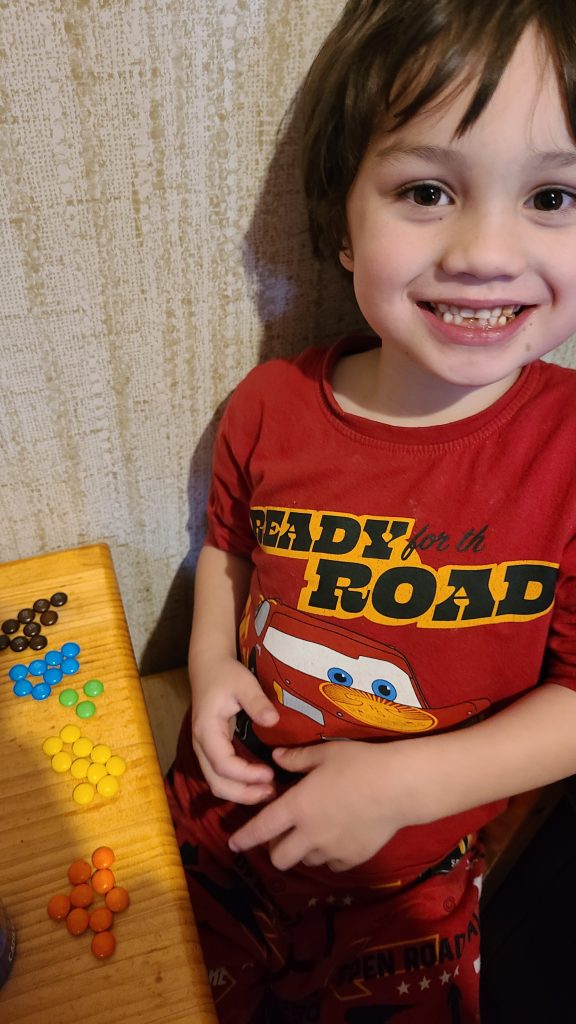
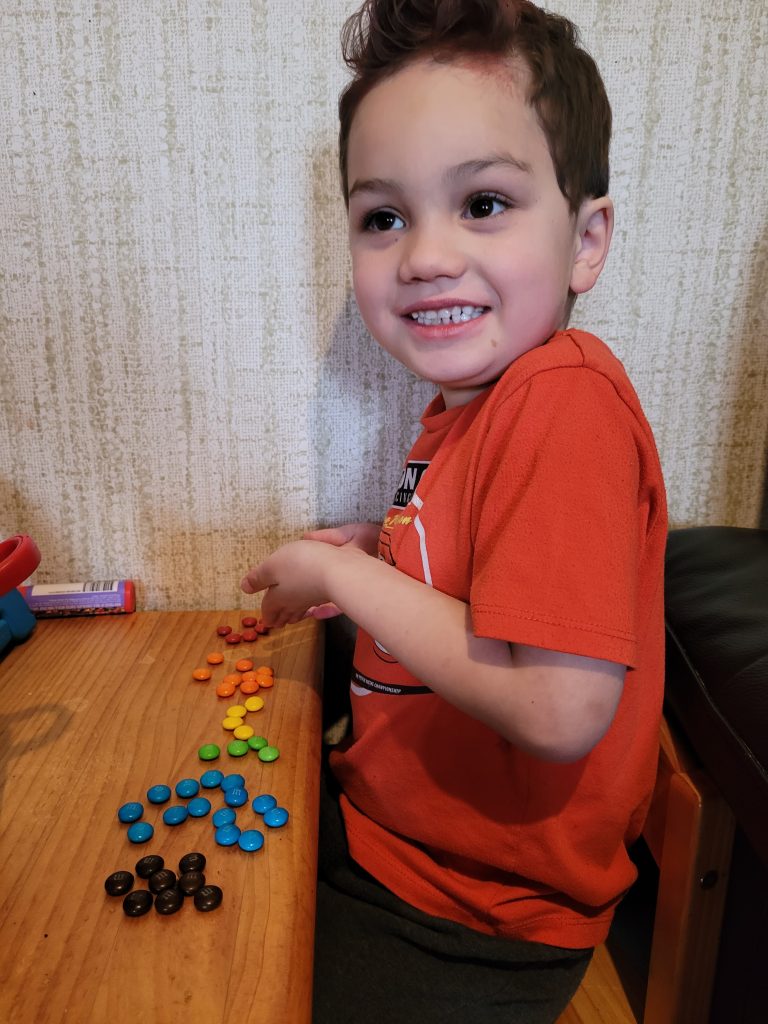
It is etched in my brain, the day Nasir first realised colours existed. He was mesmerized, focused, and obsessed. He didn’t like sitting in his highchair, being strapped and restricted has never been a thing any of my children liked, I’d compare them to free and wild animals sometimes. So, I tried to put a child friendly YouTube video on the TV, which was fine but then the video ended and the video that played after was something very simple but loaded with colours, animals, vehicles, shapes, and music that plays in lots of kid-related videos. It was beautiful and none of it made sense but he frickin’ LOVED it. The monotoned voice asking “what colour is this?” when the vehicles or animals were exposed or dipped into other colours, he eventually picked this up along with the mechanical noise of moving the objects and would recreate this with his own toys. As well as finding this educational, I’m also 98% certain this is started his deep connection with colours, cars, and Math.
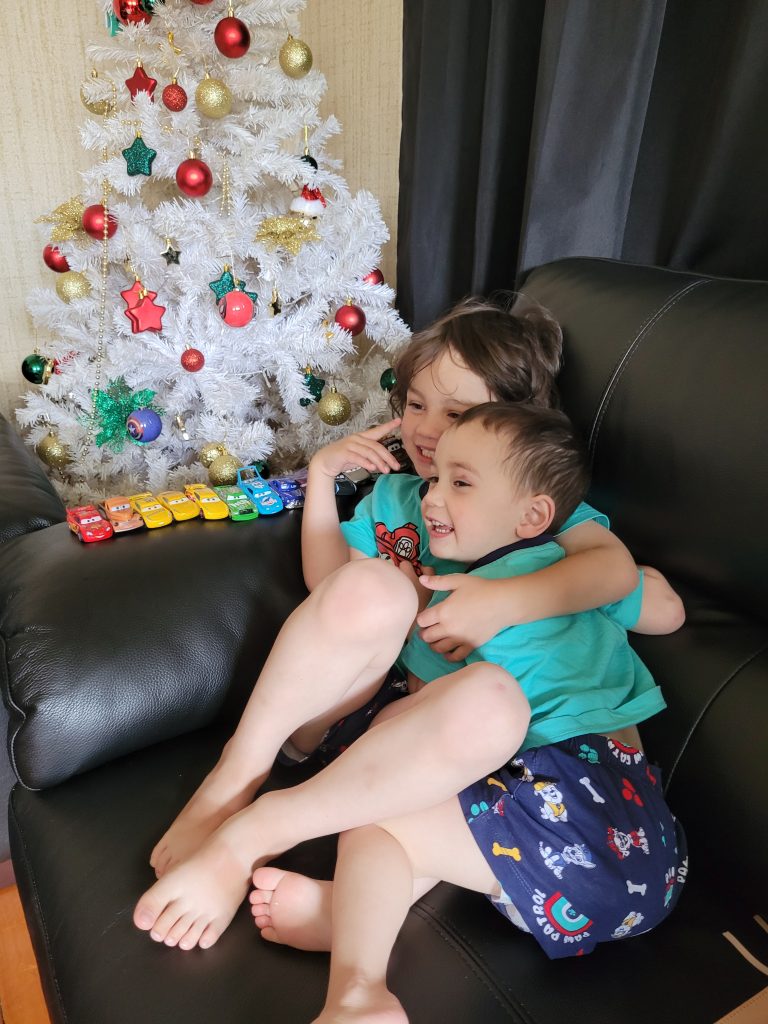
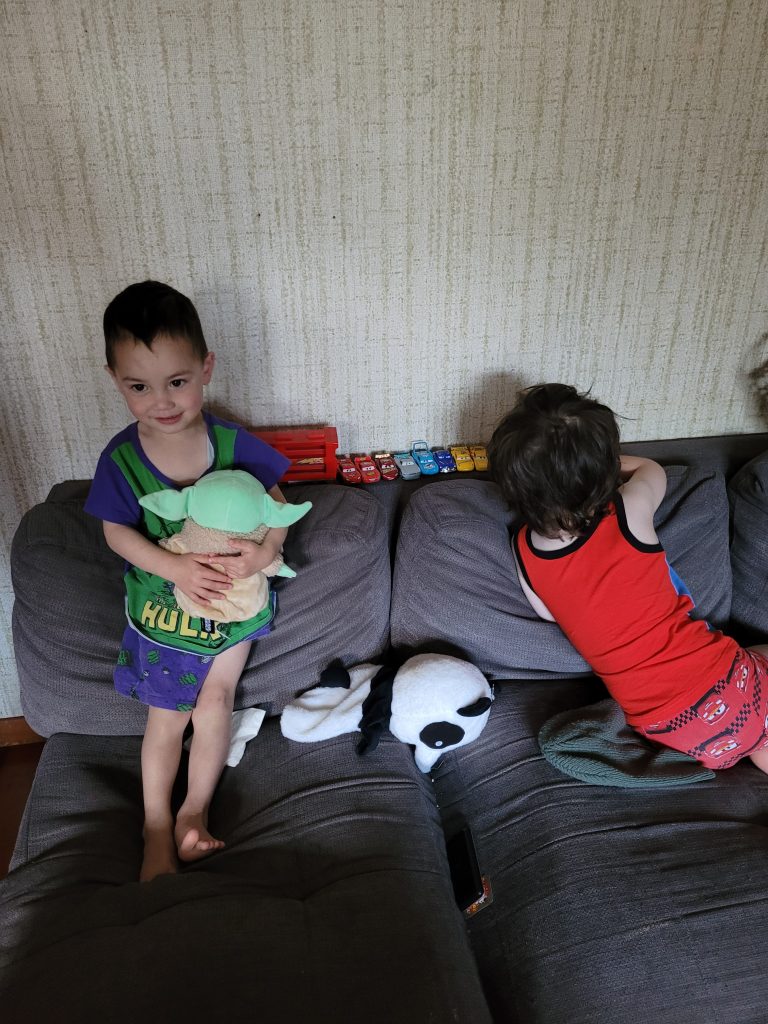
For his 5th birthday, Nasir requested rainbow coloured cars. Would you believe there are barely any other that fit what I thought he wanted. I had to get creative and merge his Pixar Cars obsession with all the different colours of the characters so he could make a rainbow. From this day forward, he would organise all of his vehicles, LMQ related or otherwise, in colour arrangements. Because his favourite colour was red and he just loved Fire Trucks, he would group ALL of his red toys together. I would find these sorts of arrangements all over the house. It’s something that the pediatrician picked up in our check in earlier this year and something important enough document in the letter outlining the discussion during the meeting.
Almost two years later, we’ve graduated to Rainbow Friends. He arranges his soft toys in his bed in gradient order and enjoys bringing them out to show which colours mixed make other ones.
If The Shoe Fits.
Once this kid developed an awareness for what he liked or for what he knew worked for him, he stuck to it and his sandals were no exception. It didn’t matter what the weather was outside, activities or sports played at daycare or school, and it certainly didn’t matter if we offered to get him some new shoes with colour he simply wanted to stick with his black Adidas sandals. I remember one school morning when it was torrential outside and we refused to let him wear his sandals because we didn’t need him getting sick, right?! Supry had to carry him to the truck, kicking, screaming, and desperately trying to take his rainboots off. In the end, our efforts were in vain because when we picked him up, his boots were no longer on his feet. They were soaked along with his socks and had been put under his bag in the wet area. So much for trying to protect his health.
It was an important lesson for us though; sometimes you have to choose your battles, even with your best intentions. Don’t get me wrong, we were choosing our battles long before this but this was more for his health than for us to try to expose him to new shoes.
Since that day, we continued buying him his beloved sandals up until very recently. He has been growing so much this past year and his sandals are end of life. We’ve kept them around so he can use them at the pool for his swimming lessons, however they have been replaced. Supry and I took him to a shop with the intention of buying him new running shoes. He was rebellious, didn’t want a bar of it unless the shoes were rainbow colours, that is until Supry saw a pair of shoes that were black, red, and blue. The colour was irrelevant but they were the first pull into just getting them onto Nasir’s feet. Unsure about how they felt, Nasir tried taking them off but before he could, Supry asked the two most important questions to ask any kid that has new and exciting shows on “Can you run real fast in them!?” and it’s sister “Can you jump real high in them?!”. Boy, oh boy! Nasir was zooming around the shop and jumping everywhere! We had a winner folks!!! What a relief because what felt like only a week later, we were back at the shop buying him a bigger pair, but this time he wanted red shoes in which he made sure he could run and jump in them.
The Sensory Idiosyncrasies: Face and Head Touches.
If I was to list Nasir’s love languages, this would be the order:
- Receiving gifts
- Quality time
- Words of affirmation
- Physical touch
- Acts of service
Nasir loves a present! Always has, what kid doesn’t!? But it’s first because while he loves being surrounded by his loved ones, he really appreciates his alone time in his own bed, under his blanket, in the dark… Or in a cupboard, whichever is available. This was a bit of a problem when we bought him a weighted blanket. From there, he loves being praised, totally understandable. I want to be told when I’ve done something well, too. Don’t get me wrong, I don’t want my children to expect to be praised and base their actions on what will get them noticed, I think it’s all in how you phrase it, but positive reinforcement has really helped with Nasir’s progress. Acts of service, we’re working on this in terms of helping tidy his belongings without the tantrum that goes with it.
Woops, did I miss Physical touch? No, no I did not. There seems to be some sensory things with him related to the head. If our toilet has just been flushed and it’s too loud, Nasir would wait, even if he was busting to go, because the flush was too much for his ears. Though this seems to not be an issue anymore. It was something we brought up in out check in earlier this year. I get it though, if the toilet door isn’t closed, no one has flushed but it’s making a noise it drives me iiiiiinsaaaannnneeeee! In relation to Physical touch, you can give him cuddle and he’s always willing for some loving and affection, but I’ve noticed he curls inwards if he’s unprepared for you to touch his head or face with your hands or lips. He will allow if but if you catch him off guard, it’s almost like a flinching. He also took the longest time to convince to allow me to cut his hair and just as much time to use the clippers. I had convinced myself that he’s had issues like this because his birth included forceps and a large graze that has left him with a scar under his eye. You can tell when he’s been upset because this scar glows red. But it’ll be interesting to see if this type of idiosyncrasy fades out.
Quirks & Weirdness Origins.
When I look back on the day we had the assessment with the pediatrician at the Child Development Center and she had asked me if he had any weird quirks, I said ‘No’. I wasn’t prepared, if I had been, I would have let her know probably everything I’ve written here and maybe a little bit more. I’m not trying to out all the weird and wonderfulness of my kid, but more to answer the question: Could this have highlighted something else was going on before Nasir was diagnosed? Absolutely! Maybe someone external could have looked at it objectively and suggested prior to the B4 School Checks. This didn’t happen and it’s neither here nor there because we are where we are now. Look, when you’re a parent, in the thick of it trying to provide for your family, operating on minimal sleep, long hours with barely any support to help you parent its super easy to forget all the things. ALL. THE. THINGS!
Something I’ve said A LOT since people have commented on one of these idiosyncrasies is “Have I messed up my child?!” You see, I organise objects in colours; I’m drawn to it, I cannot walk around my house without slippers on because I hate the feeling of dirt or crumbs on my feet (constantly vacuuming isn’t time effective), I hate washing dishes with a sink full of water because of the fear of water running down my arm, and I cannot just wear socks without shoes. I’m convinced some of this has rubbed off on my kids without me even trying. Not only this but I do see other adults that have so many quirks and weirdness to them that it just seems that children these days, regardless of neurodivergence or disability, seem somewhat normal. It’s contrasting from how I viewed the world when I was little. Different was not cool, kids!
I had been caught up in milestones and perhaps I wasn’t paying enough attention to parts of Nasir’s development that I should have been paying attention to, but in ways I am glad I didn’t focus on these areas because no child deserves to feel ostracised or not accepted by their own family. i would know, I spent a lot of my childhood acting and behaving in ways that I am mortified to look back on just because I was desperately trying to be liked by my family. It doesn’t seem fair to put my own child through that so instead, I encourage these things. As long as my children are happy and healthy, why wouldn’t I?!
Thanks for getting this far, if you did!
Elysha