
First Year at School
The start of primary school was a positive change for Nasir. For some time, drop-offs had been getting increasingly difficult at daycare, it was an emotionally stressful time for him and an exhausting one, physically and mentally for me.
Choosing a school for our boy was so important to us, especially after learning about how much he was struggling. We had originally enrolled him into a school that was on the way to daycare and closer to home, but after a lack of communication around his enrollment, we felt that it wasn’t the right fit. Following the assessment, communication was more important than before because we wanted to know how Nasir was progressing, if he was being appropriately supported, or if there were issues or concerns regarding development, behaviour, and additional needs. We needed to find a school that fit our criteria, so it was onto the next one.
Finding The Right Fit.
Someone we trusted had had a past interaction with the principal of one of the local schools and recommended we check it out based on that. It was in the opposite direction of daycare so we didn’t consider many or any of the schools in that area but what did we have to lose?
We met with the principal to see if it would be the right fit or at least improved communication. She took us on a tour of the school and observed the way she spoke to us, the students, and the staff. We couldn’t help but notice how much she cared for the safety and wellbeing of her school and the vision she had. This principal was friendly, personable, well liked, knew her student’s names, knew the kinds of teachers she wanted that would foster the culture, environment, and community of the school. She is the exact principal I wish I had when I was at school. We walked away feeling good and knew Nasir is safe with her and the teachers she has selected to help raise and educate him.
School Visits.
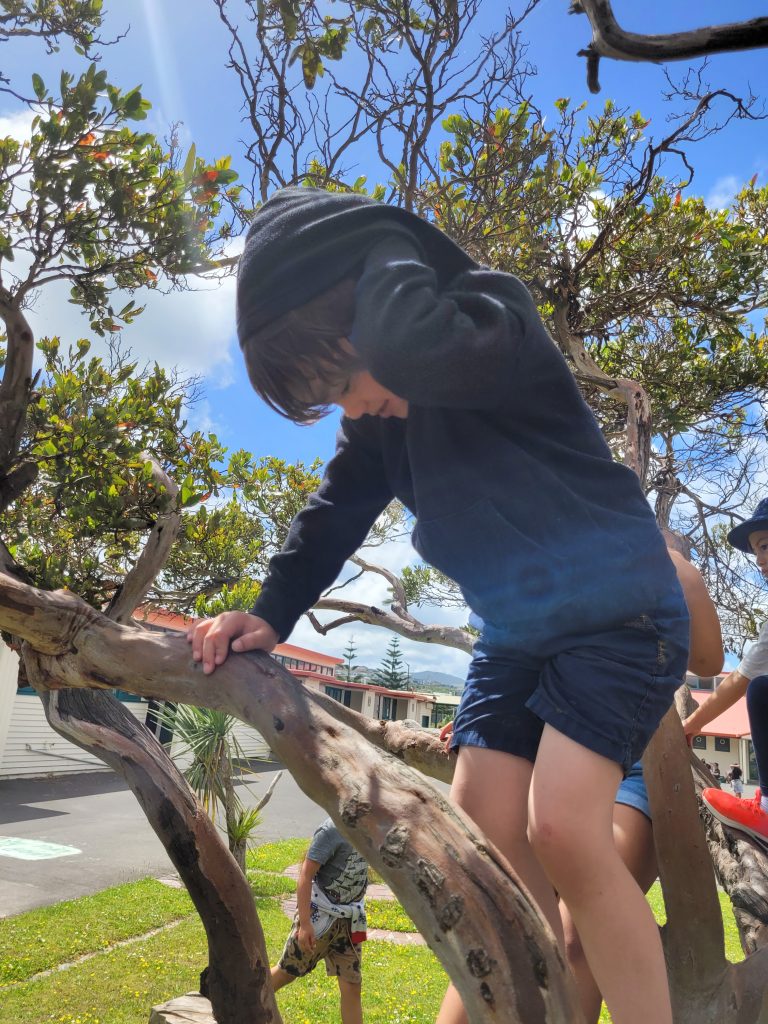
Even though we were organising this later in the year, we did manage to squeeze in some visits to allow Nasir to get a feel for what would be his new environment. On the first visit, he ran all the way to the back of the field and wouldn’t come back so I had to chase him around; he didn’t like being in an unknown place. The second visit decided to climb one of the smaller trees on the grounds, which was amazing! I’ve never seen him climb a tree before, but he seemed to really be warming to the surroundings and really loved the kind of playground they have. During these visits, Supry and I got to know the New Entrant teacher and ask her questions about what to expect.
The biggest question I had was regarding bullying. Nasir was just Nasir at daycare, everyone knew him, what he did and didn’t like, but I was scared to see how this would play out at school with other, older kids. I know how kids who present differently to typical children can be perceived and how this affects their interactions or relationships with others. It is a real concern of any parent. I can’t wrap up any of my kids in cotton wool and protect them from the world and I shouldn’t have to, though it is my responsibility to teach them how to navigate and respond to it. The teacher assured me that she had never witnessed any bullying, in fact while we were there a group of girls helped another that wasn’t part of their friend group but had been hurt on the playground. I felt at ease and thankfully, there hasn’t been any reports of bullying on Nasir, only Nasir getting upset if he didn’t get his way with something in the classroom.
The Pre-School to School Transition.
I had discussions with our Speech and Language Therapist about Nasir going to school mainly due to the fact that she wasn’t going to continue as our SLT as we were no longer going to be in her ‘zone’. Obviously, there are thoughts and feelings for every parent as their child starts a new chapter of their life but for a child that doesn’t understand what is going on and the new place they’re now going to, it can be very confusing and overwhelming. to help with this, she sent me a workbook that illustrates what the new routine is going to look like, the new faces they’ll see, and what to do when they need help. I did my best to work through this with Nasir, but he was disinterested and again, didn’t understand what it was for.
I had taken 2 weeks annual leave while we transitioned Nasir to school, and I honestly thought I would need more but I actually needed less! It wasn’t without some clinging to and crying but it was less traumatic than I had anticipated, especially after the principal had a word with me about the dump and run method, I was using which was carried over from daycare. It’s what we had to do, unfortunately. I knew Nasir didn’t understand completely what was going on, but she said to give him a hug and let him know I’m leaving but I will be back. How simple, but it didn’t take long to work. Something that did take some time to work through with him was driving to take him to school and Rahim to daycare. He knew we would drive “down to Whaea” and the other way was taking him, well his brother, to daycare. If we ever went the other way, the meltdowns he would have and we would do our best to convince him that he was never going back to daycare again, unless it was to drop-off or pick-up his brother. Some mornings he would just flat out refuse until we actually nailed down our routine that we would take him to school first, so we were always going “down” the road. With pick-ups, he eventually realised he could go in, have a play and leave daycare without being left there. I didn’t blame him though; he had a traumatising event there that called for compassion and understanding but wasn’t met with what he needed in that moment. A gradual process, but he eventually understood we no longer expected him to go to daycare.
A New Beginning.

First year was a lot like daycare, which he needed to ease the transition. I’m not sure if this is going to change or has already changed with our government, I hope it doesn’t. There was water play, tea parties, lots of reading, Lightning McQueen, and a big open space to get in lots of running. Behaviourally, Nasir was a different beast in that first week. He seemed to have chilled out and got even more so as the first term carried on. His teacher and teacher aides were so incredible, patient, and treated Nasir with respect. We had shared his medical history, likes and dislikes, and interests before school started to ensure they were informed and prepared to help make Nasir as comfortable as possible. Not once did they make this unruly boy fit into their circle, they simply allowed him to be who he was, which did come with challenges.
Building Comfort and Trust in New Surroundings.
When Nasir started school, his teachers went above and beyond to create a welcoming and comfortable environment tailored to his unique needs and interests. They recognised early on how he thrived with familiar, engaging activities and slowly introduced routines that helped him feel safe and connected. Here are some of the thoughtful ways they supported Nasir’s transition:
- They used a variety of tools and activities that helped him build trust with his teachers, laying a foundation for genuine connections.
- Nearly every day, he came home with face paint—transformed into characters he loved, like a tiger or Bowser—making his school day even more exciting.
- We also sent a printed copy of his favorite book, The Tiger Who Came to Tea, to school, offering him a familiar, comforting story to turn to. He even loved telling people his name was “Tiger Nasir” during his transition from daycare to school.
- As the year went on, his teachers introduced activities that catered to his specific interests, such as showing short films like The Gruffalo…
- …and playing songs he enjoyed. One hit was “YMCA” (much to everyone’s amusement!), and later, when Snoop Dogg released Doggyland, they even included his Affirmations song, which Nasir adored. He learned the words and actions by heart, and the teachers eagerly made it part of their morning routine.
- To encourage his love for numbers, we found Numberblocks stickers that he could use with connecting blocks at school, which made learning math even more fun and familiar.
Each of these gestures made a big difference, helping Nasir feel understood and supported as he took on the adventure of starting school.
Know Your Childs Education Rights.

I do want to acknowledge; I feel as though we are extremely fortunate to have such a school in our local area. I have recently attended a parenting workshop through Parent to Parent but I hadn’t realised it was how to navigate the education system and how to advocate for your child throughout their school life. From this, there were a lot of parents sharing their experiences and struggles to be heard and ensure their child has the understanding they need to thrive at school. It can be really hard to find a school that doesn’t see the additional needs as a burden or taking away from other kids but instead sees and opportunity to provide an inclusive environment that fosters relationships between children that haven’t been tainted by how adults treat the children that aren’t “typical”. I have known of parent’s that have been told a school cannot accept enrolment for their child due to “not having the appropriate resources to support” an additional needs child and going by the workshop I went to; this goes against the New Zealand Legislation for the child’s rights to an education.
On The Fence.
Nasir has always been a runner. Any opportunity he could take to run off, he would. Get out of the car. Run up the street. In the supermarket. Run through the checkouts and out the door. Go to a playground. Run away in any direction. See water. Run to or into it. School was no exception. There was a big field which meant exciting new adventures and no one to hold him inside. Because of this, the teachers needed to pin an apple air tag to the hood of his hoodie so they couldn’t lose him. One teacher clocked 7000 steps just by chasing after him. This was only a temporary solution to a larger issue which was that Nasir was wandering everywhere so there was potential for him to velociraptor (think back to the raptors in Jurassic Park) his way out of school. This was an opportunity for the school to completely secure the grounds which they did based on Nasir’s cognitive disability. That was a really tough and heartbreaking process.
Eventually Nasir calmed down and spent less time adventuring out and making the teachers follow after him which was incredible progress on its own. What was comforting about this entire process, though, was that not once did any of the teachers make us feel bad about Nasir’s wandering and more importantly, again, did not make Nasir fit into their circle or routine that other kids were settling into. I always find myself making excuses, overtalking, or shifting blame to what’s going on with Nasir. Not here. Here, there is acceptance, easement, and allowance to be who he is. Here, is safe. But as I’ve felt more comfortable taking the kids, especially Nasir, out in public spaces there are so many people that catch me trying to tame them and let me know that however they’re behaviour is OK by saying “Kids will be kids” or I’m met with one of those looks, you know, the smiling “been there“.
Mid-Year Reports.
Nasir was doing so well at school. I think this was mostly because the teachers and support staff weren’t trying to make his square fit into a circle. In the report meeting, comments were made like “If he’s decided he wants to go and play outside, we let the other children decide if they also would like to go as well” or “We don’t make him sit down with the other children if he doesn’t want to, but we do give him the option” which was healing for he to hear. It made me feel so much lighter that these teachers that the principal CHOSE to shape our children, and we CHOSE to help raise our children really understood the assignment, especially because the comments aren’t “Your kid is disruptive, he doesn’t listen, we have to remove him from the class! What are you teaching him at home?!”. If this was the vibe, we’d have no choice but to homeschool because over my dead body will I be allowing someone so involved in my son’s life to make him feel like he’s an issue!
Additionally, the entire report is positive. He is explorative, curious, and inquisitive. Nasir was enjoying math (shapes, colours, and numbers), loves a good book, and was practicing using fine motor skills by attempting to write his name. This has been a goal for us, but his teacher told us that he needed to master the bigger skills then the smaller stuff will follow after. This isn’t to say that there aren’t areas in which Nasir is finding certain things challenging or isn’t having a moment, but they are put forward in a thoughtful manner like:
We know that at times Nasir may view these experiences as challenging but when given time and space, and forewarning he is more readily accepting to participate in these experiences to the best of his ability.
Mid year report card
He is developing resilience when things don’t go his way and is able to use a range of strategies and skills (negotiating, waiting patiently, turn taking, and sharing) when feeling frustrated.
Mid year report card
Cognitive Connections to Changes.
The most heartwarming section of his report was discussing what Nasir was interested; music, dance, being physically active (we got a runner, folks!), the sandpit, waterplay, playdough, vehicles, and at that time he was really into dramatic play with the baby dolls. Nasir has never been into dolls or action figures for that matter. Listen, this kid thinks he’s a racecar! He’s only ever been into vehicles and water so playing with these dolls with a doll pram was more than just an interest in playing with dolls and let me tell you why. I was pregnant with his little sister, quite heavily at this point. Nasir making the connection and understanding what was about to happen was HUGE! When we were pregnant with Rahim, Nasir was unaware, then when we had him, Nasir was so confused and didn’t know how he felt about the situation. We fluctuated through good and bad times but because we didn’t know what has going on for Nasir, we weren’t as compassionate as we should have been when he repeatedly acted out. So, this time, Nasir was preparing himself for a new baby, what a sweet, sweet boy! He has been a loving, doting, and caring biggest brother ever since. When we talked to his teacher about why he was doing this, she was so happy he was making this connection. What great cognitive progress!!!!!
Year One, Completed!
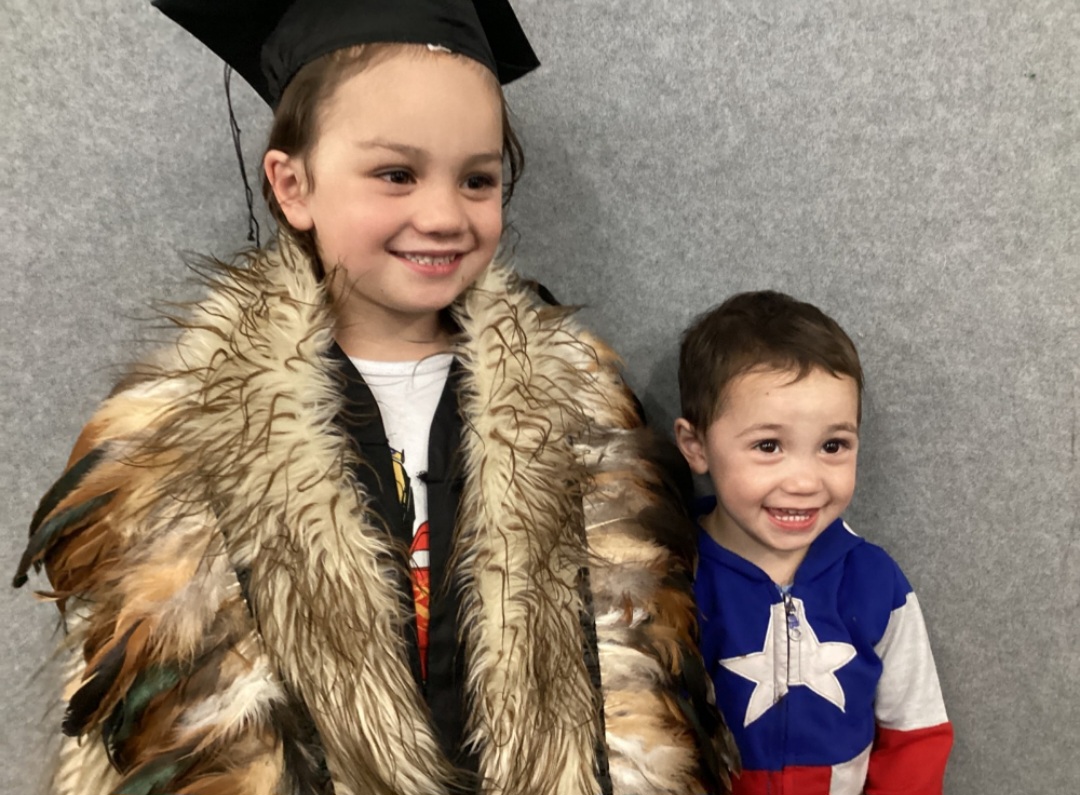
Nasir graduating from daycare with his proud brother, Rahim.
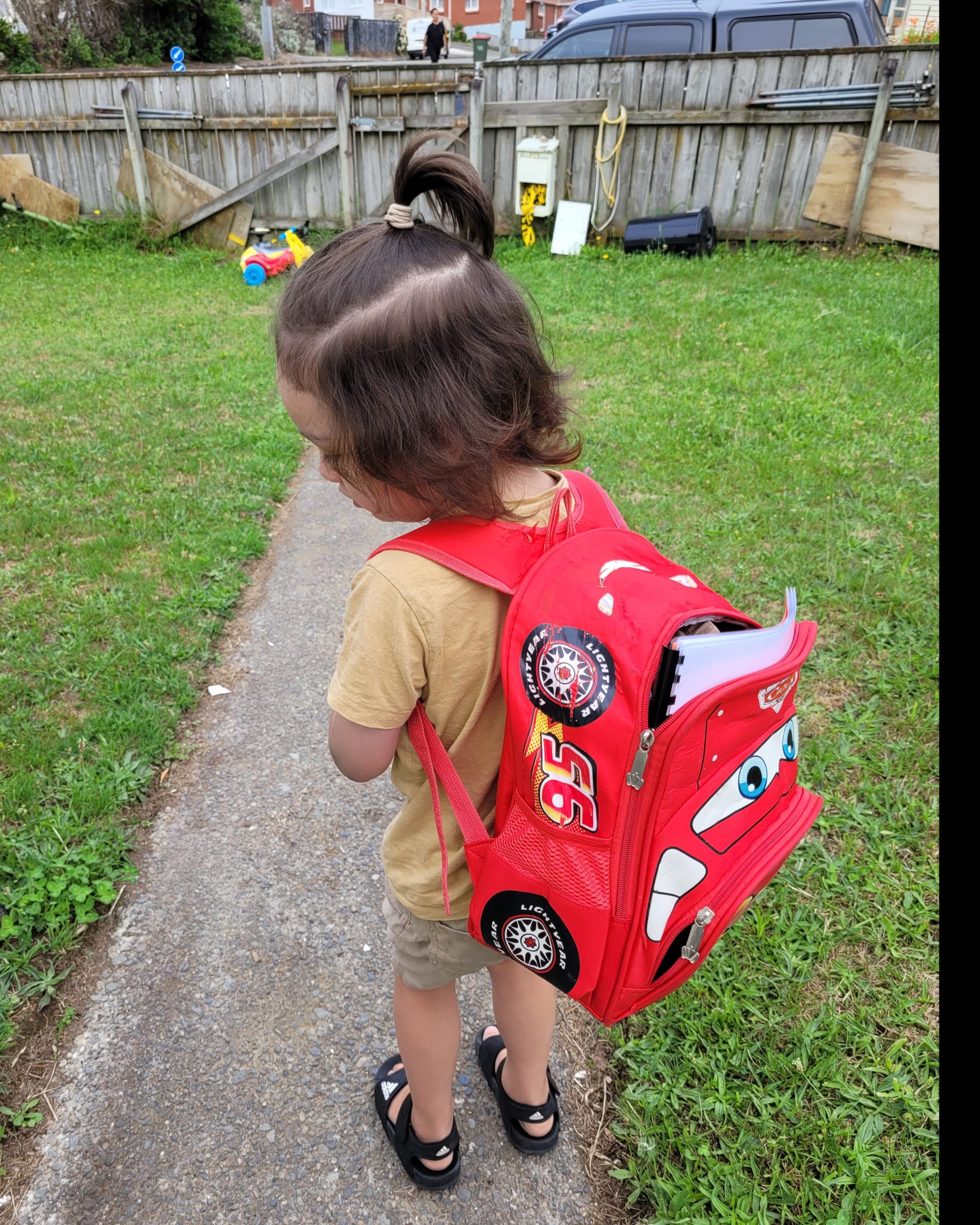
Nasir heading out the gate with his school bag filled with his lunchbox and a printed version of The Tiger Who Came To Tea to help him settle in and have something familiar.
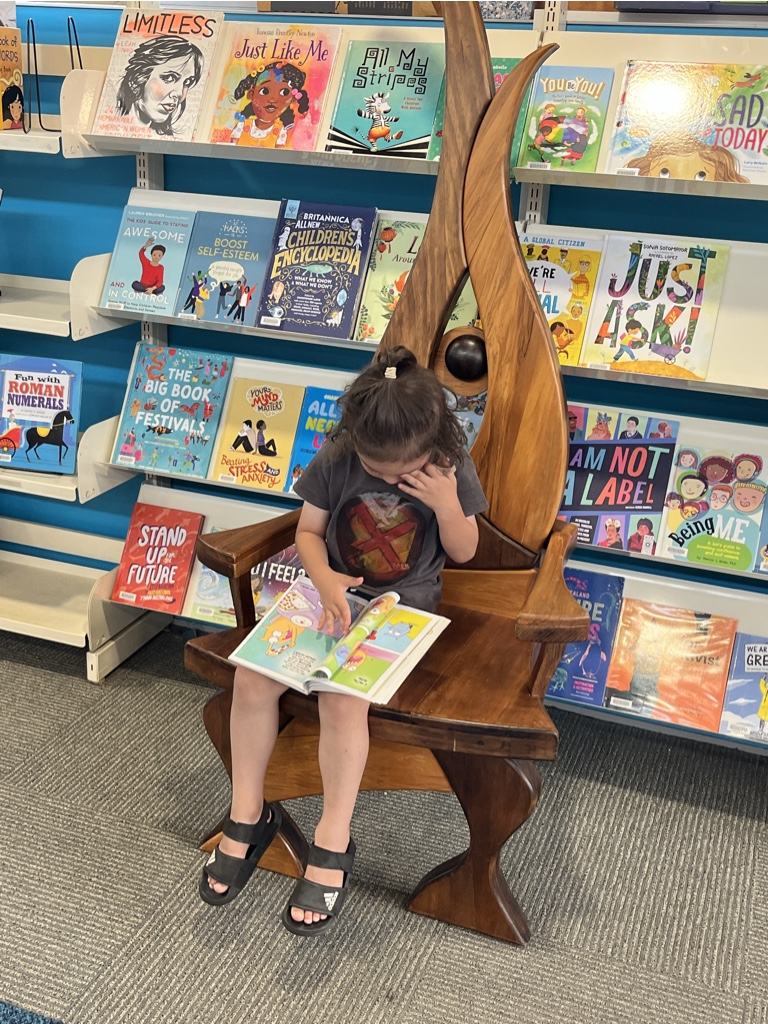
Reading books at the library on a school trip
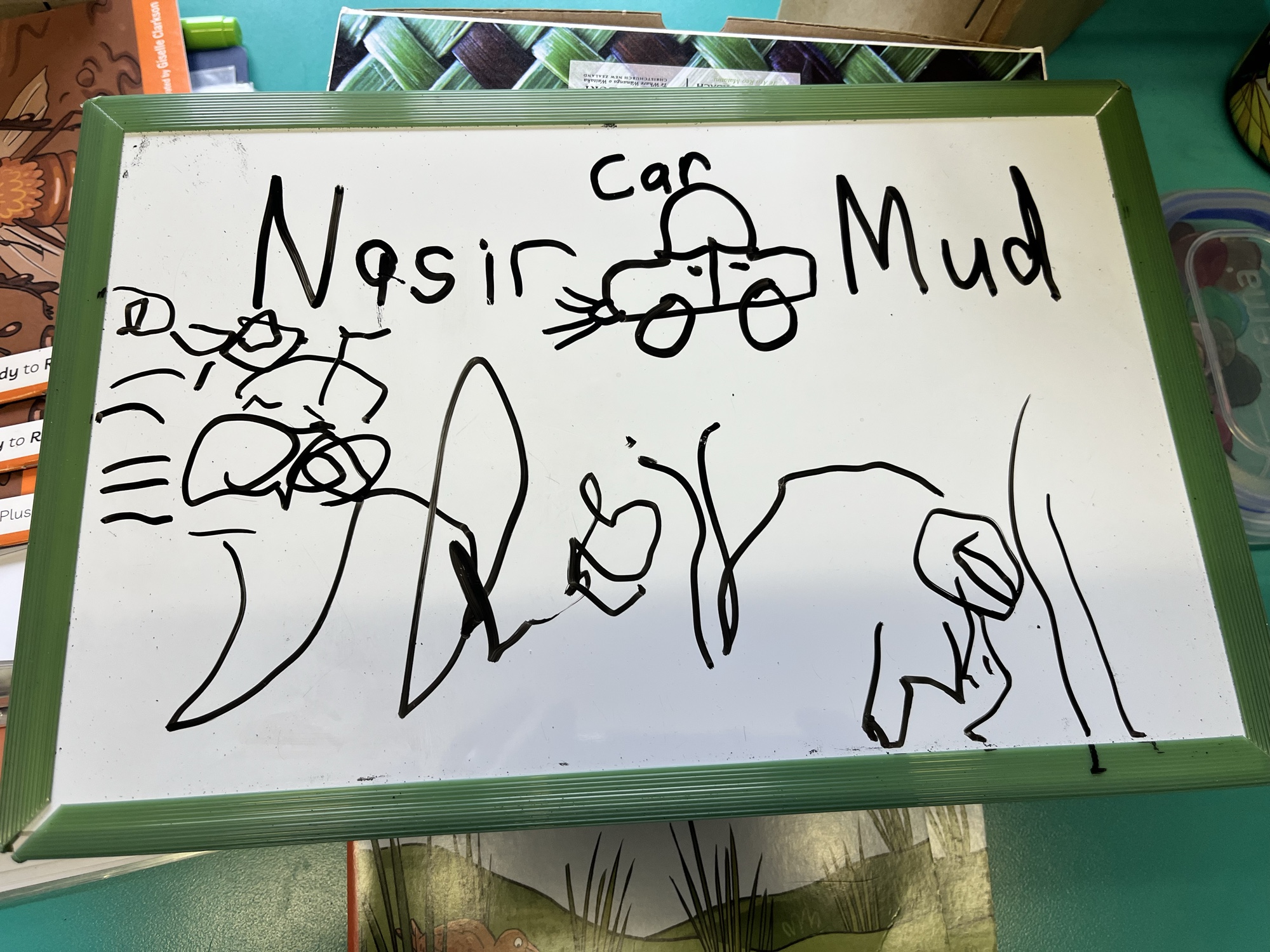
Exploring his fine motor skills using the whiteboard to write his name and draw pictures
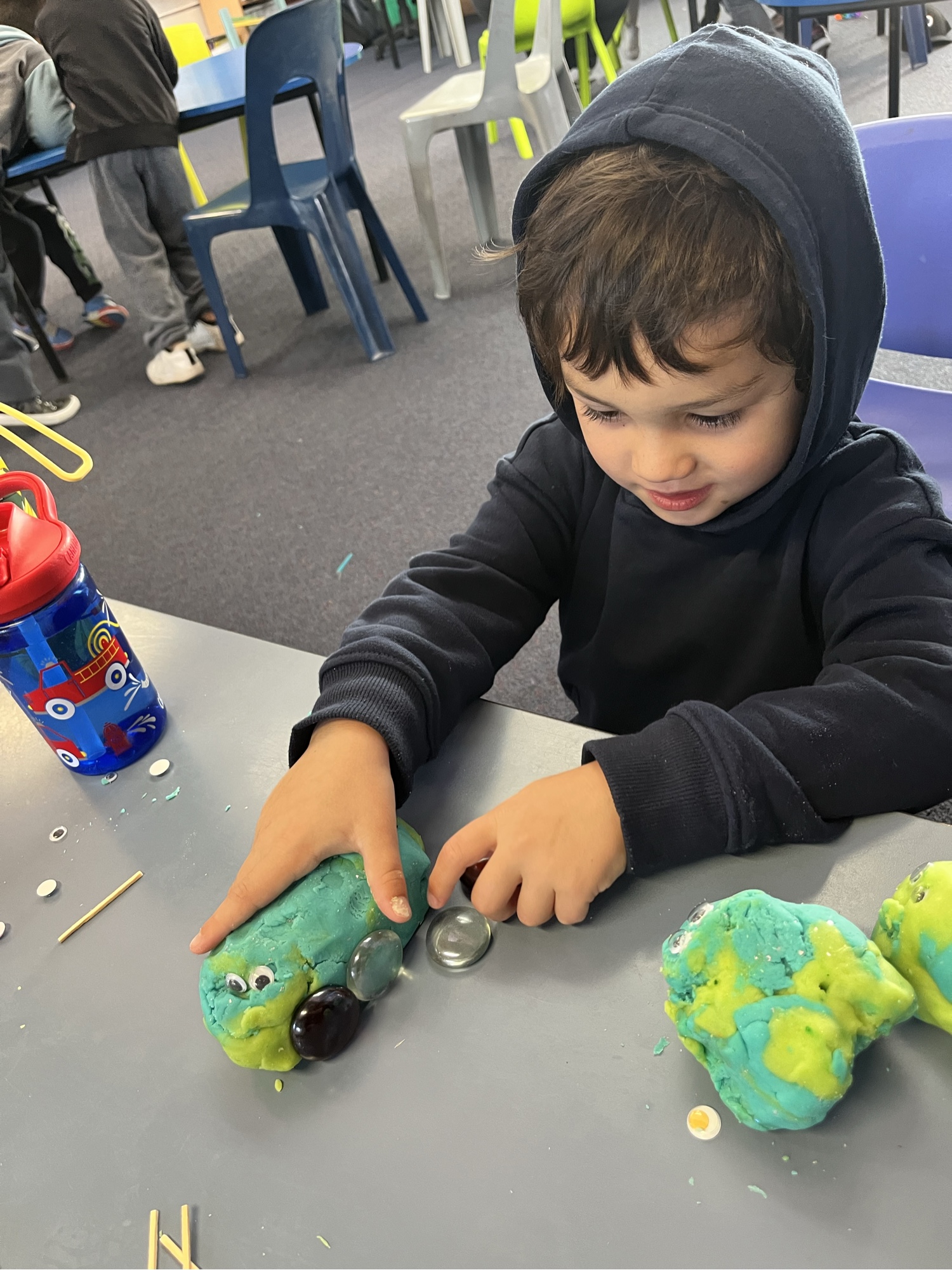
Developing his creativity and learnign to build with playdough

Nasir got to go to his first Weet-Bix Kids Try-Athalon where he loved the freedom of being able to run and race.
Is it lame to say how proud we are, not only of Nasir but also of ourselves for surviving the first year of school!? It was full of transformation for him in all areas.
- Social: Developing his social skills, learning to take turns, share, and cooperate during play. He now joins peers in games like tag and even initiates play. He is responding well to social cues and verbal prompts from teachers, showing patience and willingness to wait his turn.
- Cognitive: An active explorer with a passion for numbers, frequently organising and grouping objects. His interest in science is evident through his engagement with hands-on experiments, like erupting volcanoes and chemical reactions. His curiosity and problem-solving skills are growing as he tests ideas through trial and error.
- Speech & Language: Beginning to use words to communicate with peers, asking for turns and expressing needs. With teacher prompts, he is improving his verbal interactions during play. He is also starting to tell stories about his drawings, showing emerging language development.
- Motor (Fine & Gross): Nasir’s fine motor skills are improving as he writes numbers from 0 to 20 and his name independently with visual cues. His gross motor skills are engaged during active play, such as running in tag or dancing to songs like YMCA.
- Behaviour: Learning to manage frustration and follow instructions using structured prompts (e.g., “when you…then you can…”). He is showing more responsibility, such as organising his belongings at the end of the day. His ability to transition between activities and routines with pre-warning has also improved.
Second Year Preparation.
However, in anticipation for the coming school year, we had to have a sit-down meeting with Nasir’s first year teacher, teacher aide, and the principal to discuss transition to Year Two. The concern was that he was so attached to his first teacher that he may have a hard time adjusting to someone new. This had been a worry for me as well which is why I had been asking a few months before school ended about how we transition him, so this was a relief, but it didn’t really go as I had thought it would. You see, the principal suggested we apply for ORS funding which she thought he may qualify for but also, he would benefit from. We are all for getting him further support if it means he keeps progressing, but the catch is that, as was with the funding for the school fencing, we basically have to write a story about Nasir’s challenges and struggles even if we think he’s the most awesome kid, we have to put pen to paper and end up feeling awful about all the things he can’t do, yet.
Imagine having to receive and write all these reports about your child that highlight all the things your kid isn’t doing compared to other kids. Revisiting moments where you had intense anxiety about a situation because your child doesn’t understand the situation. Talking about it all in one go, then seeing how someone has collated that information and put it into a condensed report, I can’t tell you how many times I cried that year because of things like this. But our mantra has been and always will be regardless of how we heartbroken feel we will do what we need to, to get Nasir the support he needs to live a great life.
New Class, New Teacher.
With the transition to a new class and a new teacher, the decision was to create a Year 1.5. This would allow kids like Nasir, learning at their own pace, to go between two teachers until they were comfortable in a new routine. We met the new teacher at the end of year Whanau Day, where we got to meet her and have a brief conversation about Nasir. She was nice and I got the sense that she would be good to our boy, not only due to the principal’s stance on hiring staff but she gave the impression she would adapt to him and his needs rather than the other way around. SPOILER ALERT: She did!
Preparing For School.
Based on our experience and interactions I’ve had with other parents from casual conversations and workshops I’ve attended, I’ve put together a small list of questions parents can ask to decide on school and actions parents can take to help their children and themselves get ready for that transition.
10 Questions for Parents to Ask the School:
- How does the school support children with additional needs, including developmental delays?
- What resources, such as teacher aides, special education staff, or therapists, are available?
- How does the school approach inclusive education and manage different learning styles?
- What accommodations can be made for children, such as sensory-friendly environments or visual aids?
- What is the school’s policy on Individualised Education Plans (IEPs), and how is progress tracked?
- How does the school handle communication with parents regarding progress, concerns, or behavioral changes?
- What strategies are in place to prevent bullying and encourage inclusivity among students?
- How does the school facilitate the transition from daycare to primary school and between grades?
- Is there flexibility in the curriculum for children who learn at a different pace or need extra support?
- What safety measures are in place for children who may need extra supervision, such as those prone to wandering?
This prompts some key aspects of support, resources, communication, inclusion, and safety for children with additional needs.
20 Actions to Help Parents and Their Children with Additional Needs Prepare for Primary School:
- Visit potential schools with your child to observe teacher interactions and familiarise your child with the environment.
- Meet with key staff members, including the principal and teachers, to discuss your child’s specific needs and how they’ll be supported.
- Create a profile or introduction letter for the school, outlining your child’s strengths, challenges, and effective strategies.
- Set up a communication plan with the school to regularly review your child’s progress and address any concerns.
- Practice drop-off routines with your child to reduce anxiety and make the transition smoother.
- Create a visual guide or routine at home to mirror the school day, helping your child adjust to new schedules.
- Ensure continuity of care by discussing your child’s needs with their current therapists or specialists and coordinating with the school.
- Introduce calming techniques or familiar items (e.g., toys, sensory aids) that can help your child feel secure in the school setting.
- Practice basic self-care skills (e.g., using the bathroom independently, asking for help) to boost your child’s confidence.
- Share your child’s medical history with the school to ensure they are well-prepared for any health needs.
- Inquire about potential ORS funding to explore additional resources your child might qualify for.
- Familiarise your child with classroom rules and expectations, practicing skills like taking turns and raising hands at home.
- Engage your child in social activities outside of school to help build peer interaction skills.
- Collaborate with the school on safety measures, such as using location tracking devices if your child is prone to wandering.
- Discuss and practice safety routines with your child, such as staying within school boundaries and knowing when to ask for help.
- Introduce media or tools (e.g., books, songs) that your child enjoys and discuss integrating these into classroom activities.
- Prepare for transitions between teachers or classes by advocating for gradual changes in routines and familiarisation with new staff.
- Visit the school regularly with your child before the term starts to ease their anxiety about the new environment.
- Work with the school on accommodations like sensory-friendly spaces or allowing your child to opt out of certain tasks when overwhelmed.
- Celebrate and reinforce your child’s progress by using positive reinforcement at home to encourage them to express their feelings about school.
This can help both parents and their additional needs children prepare for school, emphasising communication, preparation, and gradual transitions.
Celebrating Growth: Our Journey to School and Beyond.
Looking back on Nasir’s transition to school, it’s incredible to see how far he has come. From finding comfort in familiar faces and routines to embracing new challenges, he has grown in ways we never imagined. As a family, we’ve learned to adapt and celebrate each milestone, big or small. Inspired by our experiences, I created a starting school workbook for parents, hoping to provide tools and support for others navigating this journey. Reflecting on our journey fills me with gratitude for the amazing progress Nasir has made, and I hope that sharing our story can help other families feel less alone as they embark on their own adventures in the world of school.
Elysha
If you have the opportunity to attend, I highly recommend making time to join this FREE workshop: Building a Good Life – Parent to Parent, especially if you have a child about to start school or even if you have a child in school and need to know how you can advocate for your child’s education rights within NZ.
Please note: the above link may be expired by the time you read this post. Hopefully they host more in the future either through an online forum or on-site (which is what I did)