
Goal Setting for Children with Disabilities: A Practical Framework
Managing life with a disabled or neurodivergent child often feels overwhelming; juggling appointments, therapies, caregiving, and maintaining a loving home. However, goal setting for children, particularly those with additional needs, can turn this chaos into a clear, purpose-driven journey.

While vision planning and goal setting can be done at any time during the year, the start of a New Year, and in New Zealand, the beginning of the new school year, is an opportune time to begin. For children with additional needs, setting goals now helps prepare not just the child but also parents, educators, and professionals. It provides an opportunity to align on expectations, identify support needs, and set a clear path forward for the year ahead.
Inspired by strategies shared during a workshop I attended and professional frameworks like ITIL, Agile, and SMART principles, this blog provides an overview of what families should consider when setting goals. For a detailed breakdown of how these frameworks can be applied, visit Goal Setting: Mastering the Next 12 Months.
Why Goal Setting Matters for Families
Goal setting for children is a transformative tool, especially for those with high or additional needs. Research shows that structured goal setting can:
- Boost motivation and focus by breaking large tasks into achievable outcomes1 (Locke & Latham, 2002).
- Develop essential life skills like resilience, discipline, and confidence2 (Zimmerman & Schunk, 2011).
- Foster collaboration between caregivers and professionals, ensuring tailored, impactful interventions3 (Morrison & Fletcher, 2002).
For families, it provides clarity, direction, and a shared sense of purpose, creating a foundation for meaningful progress and connection4 (Millar et al., 2023).
Quick Start Guide: Your Family Framework in 5 Steps
If you’re feeling overwhelmed, here’s a simplified starting point tailored to families with disabled or neurodivergent children:
- Reflect on the Past Year
- Look back on what worked, what didn’t, and the lessons learned.
- Example Prompt: What habits or routines helped my child thrive last year?
- Define Your Vision
- Write down a big-picture goal for the year that reflects your family’s priorities.
- Example Vision: Support our child’s communication skills while strengthening family bonds.
- Break Your Vision Into Categories (Big Goals)
- Identify 2–4 key areas of focus that will impact your vision.
- Example Big Goals:
- Therapy and Development: Strengthen communication skills.
- Family Connection: Foster shared activities.
- Set Focus Goals for Each Big Goal (Quarterly Goals)
- Break each Big Goal into 1–3 smaller, actionable goals to focus on over the next 3 months.
- Example Focus Goal: Practice speech therapy exercises daily for 15 minutes.
- Create Actions and Steps
- Break Focus Goals into specific actions and smaller steps.
- Example Action: Incorporate speech flashcards into playtime.
- Steps:
- Research engaging flashcards.
- Introduce three new cards each week.
- Celebrate progress with rewards or praise.
For a detailed breakdown of this framework, visit my blog post here.
Vision Planning: A Starting Point
Vision planning is the cornerstone of creating purposeful and achievable goals. During the workshop I attended, tools like Pictability, PATH, and MAPs were highlighted as effective resources for building a roadmap. These tools encourage families to reflect on their strengths, values, and community connections while envisioning both immediate and long-term goals.
This approach aligns with Millar et al. (2023), who highlight the importance of involving families and communities in collaborative planning to create meaningful and sustainable goals.
Prompts to Consider When Vision Planning
To help families align their goals with their vision, these prompts are divided into five key categories:
Strengths and Interests
- What activities does your child enjoy the most?
- What are your child’s unique strengths or talents?
- How can you build on these strengths in everyday life?
How It Helps with Vision Creation: By identifying what the child and family excel at or enjoy, families can craft a vision that builds on these positive elements. For example, if a child loves drawing, the vision might include nurturing creativity and self-expression.
How It Helps with Goal Selection: Strength-based goals, such as enrolling the child in an art class, are more motivating and achievable because they align with existing interests and skills.
Values and Aspirations
- What values guide your family’s decisions?
- What kind of future do you envision for your child?
- How do you define success for your family?
How It Helps with Vision Creation: These questions focus on what truly matters to the family, helping define a “north star” to guide decisions. For example, a family prioritising independence might create a vision of fostering their child’s self-sufficiency.
How It Helps with Goal Selection: Once values are clear, families can set goals that directly reflect them, such as teaching daily living skills to support independence.
Family Dynamics
- How can siblings support or participate in goal-setting?
- What routines bring your family the most joy?
- Are there dynamics you’d like to improve?
How It Helps with Vision Creation: Reflecting on family roles, routines, and dynamics ensures the vision is realistic and inclusive of everyone’s needs. For example, if the family values shared time, the vision might focus on fostering connection through collaborative activities.
How It Helps with Goal Selection: Families can choose goals that strengthen these dynamics, such as scheduling a weekly family game night or involving siblings in therapy exercises.
Community and Connections
- Who are the key people in your support network?
- What opportunities exist to foster friendships for your child?
- Are there community resources you’d like to access?
How It Helps with Vision Creation: These questions help families identify external resources and relationships that can support their vision. A family that values inclusion might envision creating a supportive community around their child.
How It Helps with Goal Selection: Goals could include connecting with local support groups, attending community events, or fostering friendships through inclusive activities.
Immediate and Long-Term Goals
- What pressing needs does your child have right now?
- What skills or habits would you like your child to develop in the next year?
- How can today’s goals align with your long-term vision?
How It Helps with Vision Creation: Reflecting on both immediate needs and future aspirations helps families create a vision that balances the present and the future. For example, the vision might include developing specific skills now while planning for eventual independence.
How It Helps with Goal Selection: Families can identify both quick wins (e.g., practising a single self-care skill) and broader objectives (e.g., improving social communication) that align with their long-term vision.


These prompts help families craft meaningful goals by:
- Encourages Reflection: Families explore what they value and what works for their unique circumstances, leading to a more meaningful and authentic vision.
- Focuses on Strengths: Starting from what’s already working builds confidence and ensures the vision feels achievable.
- Balances Practicality and Aspiration: Prompts address both immediate needs and long-term hopes, grounding the vision in reality while aiming for growth.
- Promotes Inclusivity: Involving all family members in reflection ensures the vision considers everyone’s needs and contributions.
- Inspires Action: The process of answering these questions naturally leads to actionable ideas, making it easier to set concrete goals.
Goal Setting for Children Using VARK
Every child is unique. The VARK model (Visual, Auditory, Reading/Writing, Kinesthetic) offers tailored ways to approach goal setting:
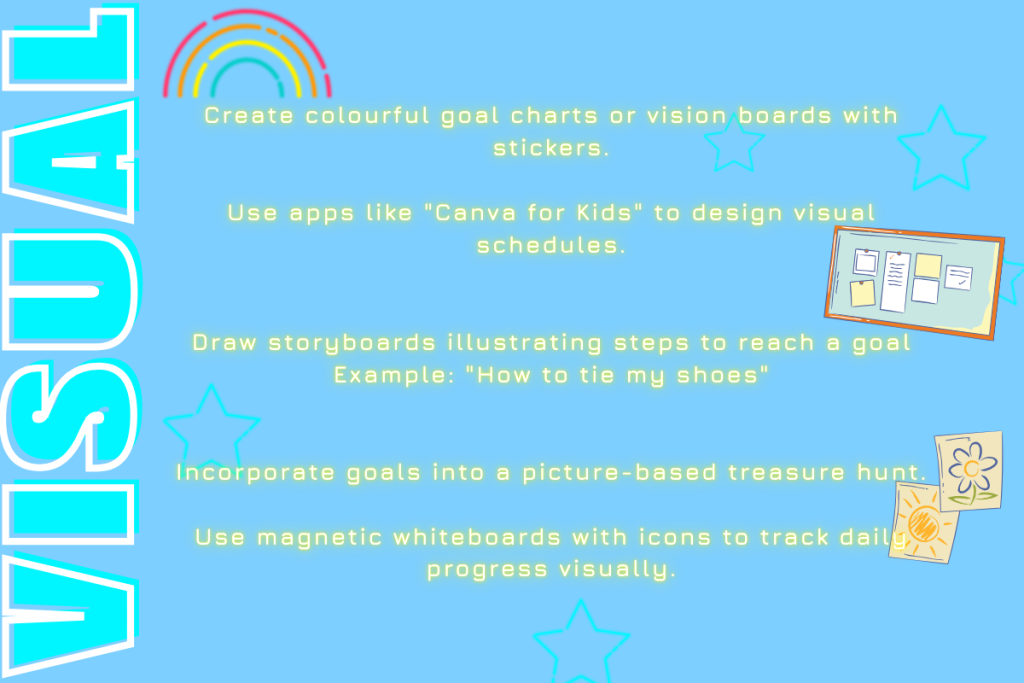
- Visual Learners: Use colour-coded charts, illustrated task checklists, progress tracking boards with stickers, video-based instructions, drawing tasks related to goals
- Auditory Learners: Engage through verbal encouragement or recorded verbal praise, step-by-step audio instructions, songs related to goals, group discussions, interactive voice-controlled apps
- Reading/Writing Learners: Keep goal journals, written reflections, simple task lists with pictures, labelled diagrams, word-matching games related to goals
- Kinesthetic Learners: Incorporate hands-on activities, like token systems (moving tokens for progress), puzzles, sensory tasks tied to goals, DIY crafts representing goals, physical role-play activities
Zimmerman and Schunk’s (2011) research demonstrates that tailoring methods to children’s unique learning preferences fosters self-regulation and motivation, which are crucial for achieving developmental milestones.
VARK Strategies for Engaging Children in Goal Setting
(Nasir helped creating these graphics)


Tips for Parents Supporting the Process
Build Predictable Routines: Structure makes goals easier to integrate and track.
Keep Goals Flexible: Be patient and adjust goals as needed. Progress may take time, and that’s okay.
Celebrate Every Milestone: Every step forward, no matter how small, deserves celebration.
Reflect: Regularly review what’s working and adjust as needed.
Connect: Join support groups for shared advice and encouragement.
Start Small: Begin with one or two goals and build from there.
Example from Our Family Journey
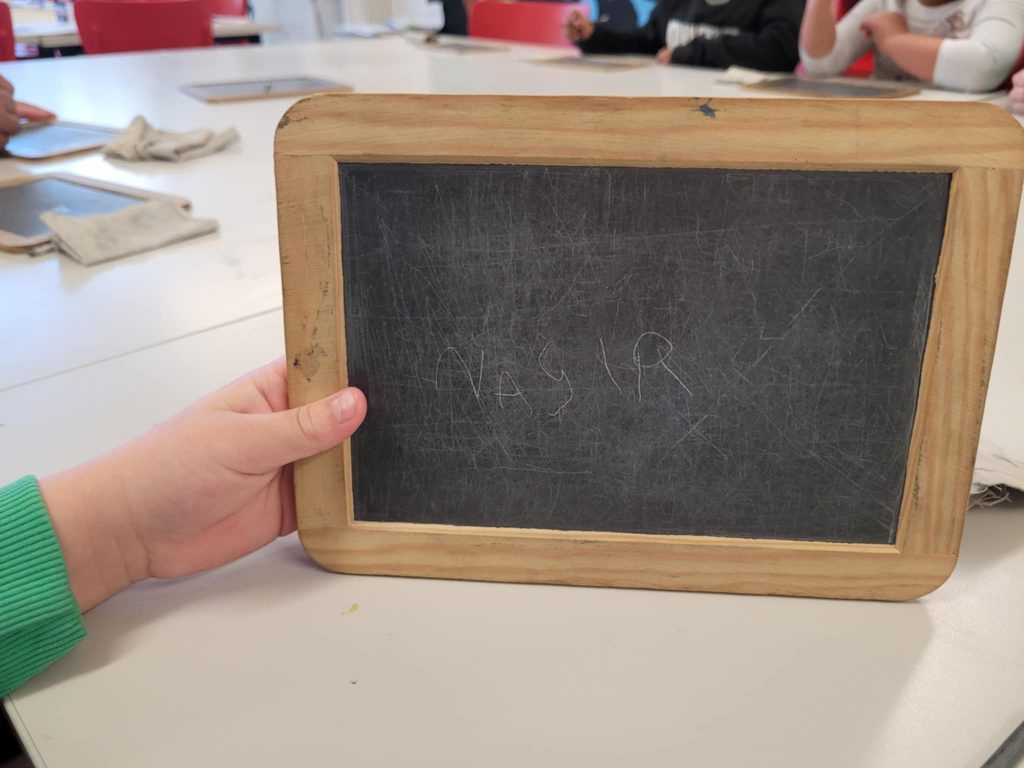
When my son Nasir struggled with fine motor tasks like writing his name, we started small. Or should I say BIG. We were advised he had to master the big stuff first, so his love of messy play became our tool. He would mould, roll, stretch, and squeeze playdough or other sensory items like water or sand. Each car shaped or ice-cream made earned a cheer and a high 5. These simple, fun steps helped him build confidence and motor skills over time.
This approach reflects findings by Morrison and Fletcher (2002), who emphasize that parents’ active involvement in goal-setting and skill development leads to more targeted and successful outcomes.
Practical Tools and Resources
- Reflection Guide: Link to our post on using the framework effectively
- Planning Guides: Parent to Parent Vision Planning guidance
- Disability Funding: Parent to Parent resource on available funding to support children and families
Final Thoughts: Celebrate Progress, Not Perfection
Life with a disabled or neurodivergent child is a journey of unique challenges and beautiful triumphs. By blending structure and flexibility, you can set meaningful goals, celebrate successes, and create an environment where everyone thrives.
What’s your family’s vision for this year? Share it in the comments below. We’re all in this together.
Elysha
References
- Locke, E. A., & Latham, G. P. (2002). Building a practically useful theory of goal setting and task motivation. *American Psychologist.* ↩︎
- Zimmerman, B. J., & Schunk, D. H. (2011). Self-regulated learning and academic achievement: Theoretical perspectives. Routledge. ↩︎
- Morrison, R. S., & Fletcher, P. C. (2002). Interventions for families of children with disabilities. *Family Process.* ↩︎
- Millar, C., Moran, J., & Reilly, R. (2023). Enabling collaborative goal-setting for children with disabilities: Evidence-based strategies. *New Zealand Journal of Psychology.* ↩︎